
PEG-MGF 2 mg: Uses, Benefits, Research, Safety, and Frequently Asked Questions
What Is PEG-MGF 2 mg?
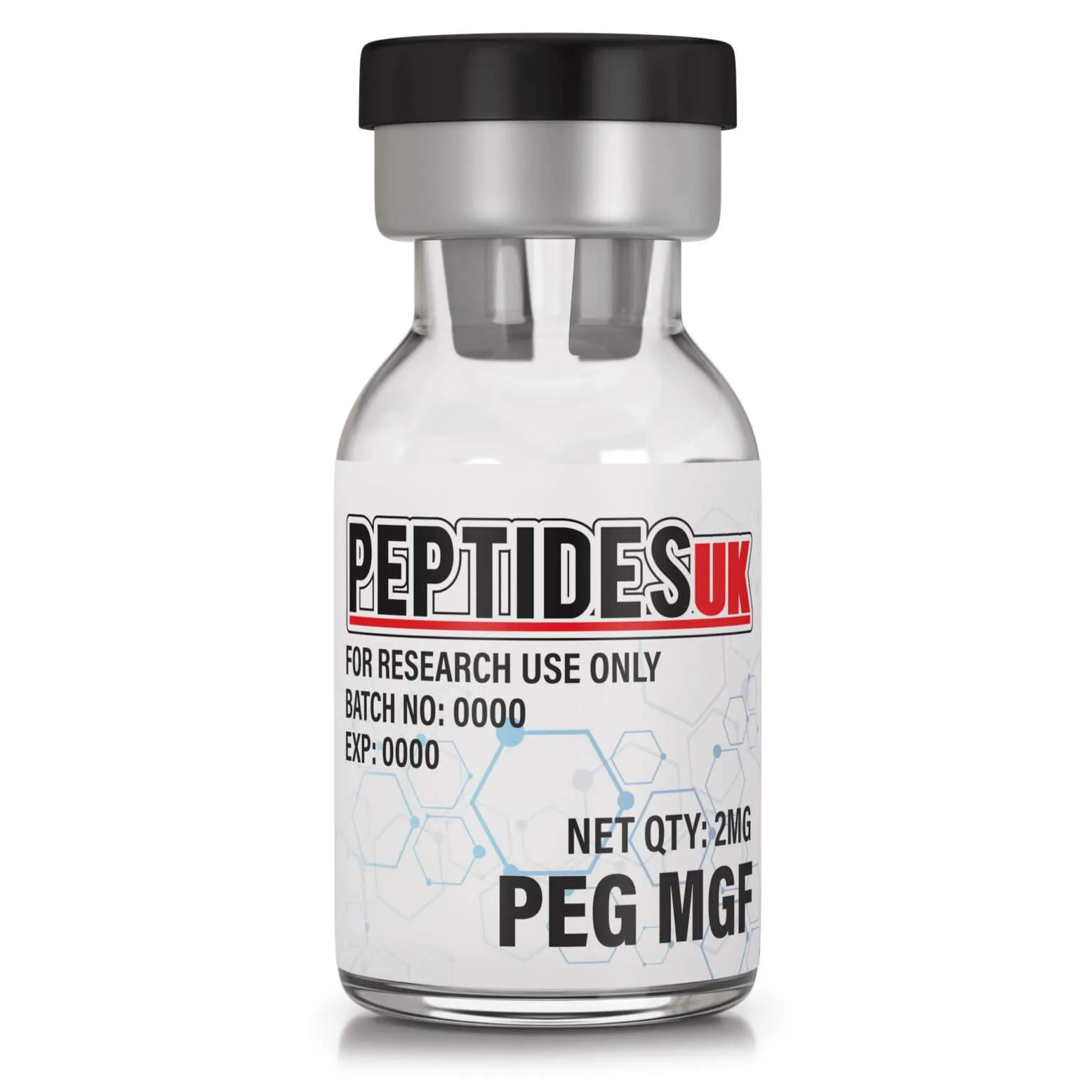
PEG-MGF 2 mg refers to a research peptide product containing 2 milligrams of PEGylated Mechano Growth Factor (PEG-MGF).
PEG-MGF is a modified form of Mechano Growth Factor (MGF), which is a naturally occurring variant of Insulin-like Growth Factor-1 (IGF-1). MGF is produced in response to mechanical stress, such as physical activity, and is being studied for its possible role in muscle tissue repair and growth-related processes.
The term PEGylated means that polyethylene glycol (PEG) has been attached to the peptide structure. This modification is designed to increase stability and extend how long the peptide may remain active in biological systems.
PEG-MGF is considered an experimental research peptide and is not an approved medication for muscle growth, performance enhancement, or disease treatment.
How PEG-MGF Works
PEG-MGF is being researched for its possible involvement in growth and repair signaling pathways.
Researchers are studying its relationship with:
- IGF-1 signaling — pathways involved in growth, repair, and cellular communication.
- Muscle regeneration pathways — processes involved in recovery after tissue stress.
- Satellite cells — muscle cells involved in muscle repair and adaptation.
- Protein synthesis regulation — biological processes related to tissue maintenance.
The exact effects and safety profile of PEG-MGF in humans remain under investigation.
PEG-MGF 2 mg Uses
Muscle Research
PEG-MGF is primarily studied in relation to skeletal muscle biology, including:
- Muscle repair mechanisms.
- Cellular responses to exercise.
- Muscle tissue adaptation.
- Growth factor signaling.
Exercise and Recovery Research
Scientists are investigating how MGF-related pathways respond to:
- Mechanical stress.
- Physical activity.
- Muscle injury.
- Tissue remodeling.
These studies are aimed at understanding natural biological repair processes.
Regenerative Biology Research
Growth factors such as MGF are studied because of their involvement in:
- Cell communication.
- Tissue maintenance.
- Repair signaling.
Research continues to explore potential medical applications.
Potential Benefits of PEG-MGF
Research interest in PEG-MGF includes possible roles in:
- Supporting muscle repair pathways.
- Influencing cellular regeneration signals.
- Studying exercise adaptation.
- Understanding growth factor activity.
- Exploring tissue recovery mechanisms.
However, these potential effects have not been established as proven human health benefits.
PEG-MGF 2 mg Dosage Information
A label stating PEG-MGF 2 mg indicates the amount of peptide contained in the product.
Currently:
- There is no approved medical dosage for PEG-MGF.
- There is no standardized human treatment protocol.
- Long-term safety information is limited.
Research peptides should only be evaluated within appropriate scientific or medical settings.
How PEG-MGF Is Studied
PEG-MGF research may involve:
- Laboratory studies.
- Animal models.
- Cellular research.
Scientists examine:
- Growth factor activity.
- Tissue signaling.
- Muscle biology.
- Cellular responses.
Human research data remains limited.
Possible Side Effects and Risks
Because PEG-MGF is experimental, the complete range of possible effects is not fully known.
Potential concerns may include:
- Unknown long-term effects.
- Changes in growth factor signaling.
- Possible immune reactions.
- Injection-related reactions with certain formulations.
- Unregulated product quality concerns.
Serious Safety Concerns
Growth factor-related compounds require careful evaluation because growth signaling pathways are complex.
Seek medical advice if experiencing:
- Severe allergic reactions.
- Unusual swelling.
- Persistent pain or inflammation.
- Concerning changes after exposure to an experimental compound.
Safety Information
Before considering experimental growth factor peptides, discuss your health history with a healthcare professional, especially if you have:
- Cancer history or risk factors.
- Hormonal disorders.
- Diabetes or metabolic conditions.
- Heart disease.
- Liver or kidney problems.
- Pregnancy or breastfeeding considerations.
Growth pathways can affect many systems in the body, making professional evaluation important.
Drug and Supplement Interactions
Interactions between PEG-MGF and medications or supplements are not well established.
Inform a healthcare provider about:
- Prescription medicines.
- Hormonal treatments.
- Supplements.
- Other research compounds.
Do not combine experimental compounds without professional guidance.
Pregnancy and Breastfeeding
The safety of PEG-MGF during pregnancy and breastfeeding has not been established.
Individuals who are pregnant, planning pregnancy, or breastfeeding should consult a healthcare professional before exposure to experimental peptides.
Storage Information
Research peptide products should be stored according to manufacturer instructions.
General storage considerations may include:
- Protecting from excessive heat.
- Avoiding moisture exposure.
- Following product-specific storage requirements.
- Keeping away from children.
Storage conditions may vary by formulation.
Current Scientific Status
PEG-MGF remains an experimental research peptide.
Current scientific interest focuses on:
- Muscle biology.
- Growth factor signaling.
- Tissue repair mechanisms.
- Cellular regeneration.
More research is needed to determine its safety, effectiveness, and possible medical applications.
Frequently Asked Questions (FAQs)
What is PEG-MGF 2 mg used for?
PEG-MGF 2 mg is a research peptide studied for its possible role in muscle repair, growth factor signaling, and tissue biology.
Is PEG-MGF a medication?
No. PEG-MGF is not an approved medication for treating medical conditions or enhancing physical performance.
What does PEGylated mean?
PEGylation refers to attaching polyethylene glycol molecules to a compound to improve stability and potentially extend activity.
Does PEG-MGF build muscle?
PEG-MGF is studied in relation to muscle biology, but muscle-building effects in humans have not been scientifically established.
Is PEG-MGF safe?
Long-term safety in humans is not fully known because clinical research is limited.
Is PEG-MGF the same as IGF-1?
No. PEG-MGF is a variant related to the IGF-1 family of growth factors but has different biological characteristics.
Can PEG-MGF improve exercise recovery?
PEG-MGF is researched for its role in muscle repair pathways, but confirmed benefits for exercise recovery in humans are not established.
How long does PEG-MGF last in the body?
PEGylation is designed to affect stability and activity duration, but exact human activity duration is not well established.
Is PEG-MGF approved by health authorities?
No. PEG-MGF is considered an experimental research compound.
Who should avoid PEG-MGF?
Individuals with certain medical conditions, pregnancy, breastfeeding, or concerns about growth factor-related effects should seek professional medical advice before exposure.
Final Thoughts
PEG-MGF 2 mg is an experimental peptide related to growth factor research and muscle biology. Scientists study it because of its possible involvement in tissue repair, cellular signaling, and muscle adaptation.
Although PEG-MGF has generated interest in research communities, there is currently insufficient human evidence to confirm specific benefits or establish safe medical use.
Medical Disclaimer: This article is for educational and informational purposes only and should not replace professional medical advice, diagnosis, or treatment. Always consult a qualified healthcare professional before using experimental compounds or making decisions about your health.
Be the first to review “PEG MGF 2mg”
Related products
Peptides
Peptides
Peptides
Peptides
Peptides
Peptides
Peptides
2 reviews for PEG MGF 2mg
There are no reviews yet.