
Uncategorized
JAK INHIBITORS
Nov
JAK Inhibitors: A Comprehensive Guide to Their Uses, Benefits, Risks, and Future in Modern Medicine
JAK Inhibitors: A Comprehensive Guide to Their Uses, Benefits, Risks, and Future in Modern Medicine
SEO Meta Description
Discover what JAK inhibitors are, how they work, their role in autoimmune diseases, alopecia areata, inflammation, benefits, risks, and the future of targeted medicine.
Introduction
Modern medicine continues to evolve through advances in targeted therapies designed to address the underlying causes of disease rather than only managing symptoms. One of the most significant developments in recent years has been the introduction of Janus kinase (JAK) inhibitors, a class of medicines that target specific pathways involved in immune system activity and inflammation.
JAK inhibitors have gained attention for their role in treating several immune-related conditions, including rheumatoid arthritis, eczema, ulcerative colitis, psoriatic arthritis, and alopecia areata. Their ability to influence immune signalling has opened new possibilities for patients who may not have responded well to traditional treatments.
Among their most discussed applications is alopecia areata, an autoimmune condition that causes unpredictable hair loss. Research into JAK inhibitors has provided new hope for some individuals experiencing severe forms of this condition.
This article explores the science behind JAK inhibitors, how they work, their potential benefits, safety considerations, and their growing role in modern healthcare.
What Are JAK Inhibitors?
JAK inhibitors are a group of medications that block enzymes known as Janus kinases (JAKs). These enzymes are essential components of a communication system inside the body called the JAK-STAT signalling pathway.
The JAK-STAT pathway helps cells respond to signals from cytokines, which are proteins involved in regulating:
- Immune responses
- Inflammation
- Cell growth
- Tissue repair
- Blood cell production
In healthy individuals, this system helps maintain balance within the immune system. However, in autoimmune and inflammatory diseases, these signals can become overactive, causing the immune system to attack healthy tissues.
By reducing excessive signalling, JAK inhibitors help calm abnormal immune activity and reduce inflammation.
Unlike some biologic therapies that require injections or infusions, many JAK inhibitors are taken orally, offering a convenient treatment option for suitable patients.
How Do JAK Inhibitors Work?
To understand how JAK inhibitors work, it is helpful to understand the role of cytokines.
Cytokines act as chemical messengers that allow immune cells to communicate. When cytokines attach to receptors on the surface of cells, they activate JAK enzymes inside the cell.
This triggers a chain reaction:
- A cytokine binds to a specific cell receptor.
- JAK enzymes become activated.
- STAT proteins are switched on.
- STAT proteins enter the cell nucleus.
- Genes involved in inflammation are activated.
In autoimmune conditions, this process can become excessive and contribute to ongoing inflammation and tissue damage.
JAK inhibitors interrupt this pathway by blocking JAK enzyme activity, reducing inflammatory signals and helping restore immune balance.
Types of JAK Inhibitors
Several JAK inhibitors have been developed and approved for specific medical conditions.
Common examples include:
Tofacitinib
Tofacitinib was one of the first JAK inhibitors introduced for clinical use. It has been studied and used in conditions involving immune system overactivity.
Baricitinib
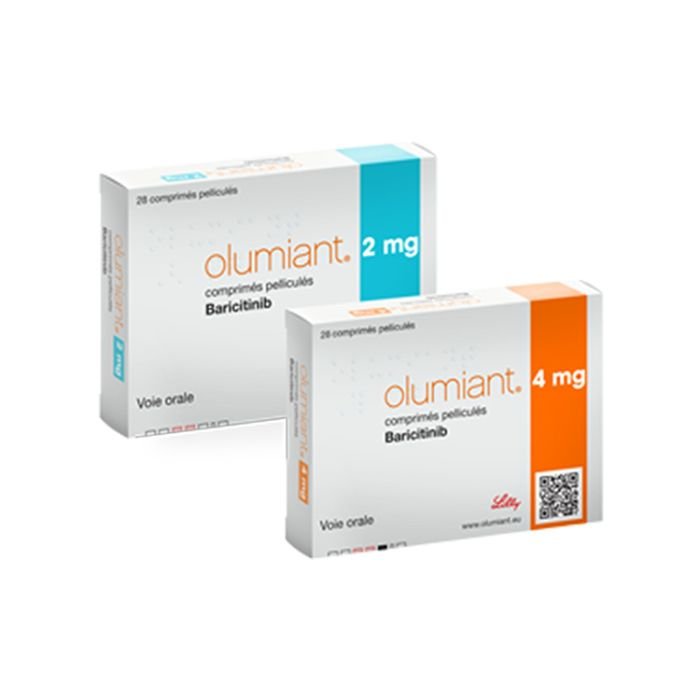
Baricitinib has gained significant attention due to its use in rheumatoid arthritis and its approval for certain cases of severe alopecia areata in some regions.
Upadacitinib
Upadacitinib is a selective JAK inhibitor designed to target specific inflammatory pathways and is used for several immune-mediated diseases.
Abrocitinib
Abrocitinib is primarily associated with the treatment of moderate-to-severe atopic dermatitis.
Filgotinib
Filgotinib has been investigated for inflammatory conditions, including rheumatoid arthritis and inflammatory bowel disease, with availability depending on regional approvals.
Different JAK inhibitors vary in their selectivity, meaning they may affect different JAK enzymes to varying degrees.
JAK Enzymes Explained
The JAK family consists of four main enzymes:
- JAK1
- JAK2
- JAK3
- TYK2
Each plays a different role in immune communication.
For example:
- JAK1 is involved in many inflammatory pathways.
- JAK2 plays a role in blood cell production and immune signalling.
- JAK3 is strongly associated with immune cell development and function.
- TYK2 contributes to certain inflammatory responses.
The selectivity of a JAK inhibitor can influence both its effectiveness and possible side effects.
Medical Uses of JAK Inhibitors
JAK inhibitors have expanded treatment options for several chronic inflammatory and autoimmune conditions.
Rheumatoid Arthritis
Rheumatoid arthritis is an autoimmune disease where the immune system attacks the joints, causing:
- Pain
- Swelling
- Stiffness
- Reduced mobility
JAK inhibitors can help reduce inflammatory activity and improve symptoms in some patients.
They may be prescribed when other treatments have not provided adequate control or when a different treatment approach is needed.
Atopic Dermatitis (Eczema)
Atopic dermatitis is a chronic inflammatory skin condition associated with immune system overactivity.
Symptoms may include:
- Persistent itching
- Dry skin
- Redness
- Skin irritation
- Inflammation
JAK inhibitors can reduce inflammatory signalling involved in eczema, helping some patients achieve improved skin condition and reduced discomfort.
JAK Inhibitors and Alopecia Areata
Understanding Alopecia Areata
Alopecia areata is an autoimmune condition where the immune system mistakenly targets healthy hair follicles. This immune attack disrupts the normal hair growth cycle, causing hair to fall out in small, round patches.
The condition can affect:
- Scalp hair
- Eyebrows
- Eyelashes
- Beard hair
- Body hair
The severity of alopecia areata varies greatly. Some people experience small areas of temporary hair loss, while others may develop more extensive forms such as:
- Alopecia totalis: Complete loss of scalp hair
- Alopecia universalis: Loss of hair across the entire body
Although the exact cause is not fully understood, researchers believe that genetic factors, immune system activity, and environmental triggers may all contribute.
How JAK Inhibitors May Help With Alopecia Areata
One of the most exciting areas of JAK inhibitor research is their potential role in treating alopecia areata.
In alopecia areata, immune cells release inflammatory signals that interfere with normal hair follicle function. These signals can cause follicles to enter a resting phase, preventing normal hair production.
JAK inhibitors work by blocking some of the immune pathways involved in this process.
By reducing abnormal inflammatory signalling, JAK inhibitors may help:
- Protect hair follicles from immune attack
- Support the return of the normal hair growth cycle
- Encourage new hair production
- Improve scalp coverage in some patients
Clinical research has shown that certain JAK inhibitors can lead to meaningful hair regrowth in some individuals with severe alopecia areata.
However, responses vary from person to person, and treatment decisions should always be made with guidance from a qualified healthcare professional.
JAK Inhibitors and Hair Regrowth Research
Hair growth is a complex biological process involving communication between immune cells, hormones, growth factors, and hair follicle cells.
Research into JAK inhibitors has changed the understanding of how immune activity influences hair loss.
Studies have explored their ability to improve:
- Scalp hair density
- Hair thickness
- Eyebrow regrowth
- Eyelash regrowth
- Overall quality of life for people affected by alopecia areata
The results have been promising, particularly for individuals with moderate-to-severe disease.
However, JAK inhibitors are not considered a universal treatment for all forms of hair loss.
They are mainly associated with autoimmune hair loss conditions, particularly alopecia areata, rather than common genetic hair loss such as male-pattern or female-pattern hair loss.
Benefits of JAK Inhibitors
JAK inhibitors offer several potential advantages compared with some traditional treatments.
Targeted Immune Action
Rather than broadly suppressing the entire immune system, JAK inhibitors focus on specific signalling pathways involved in inflammation.
Oral Administration
Many JAK inhibitors are available as tablets, which may be more convenient compared with treatments requiring injections or hospital visits.
Fast Symptom Improvement
Some patients experience improvements in inflammatory symptoms relatively quickly, although the timeline varies depending on the condition being treated.
Treatment Options for Difficult Cases
JAK inhibitors may provide an option for individuals who have not responded adequately to other therapies.
Improved Quality of Life
By reducing disease activity, JAK inhibitors may help improve daily comfort, confidence, and physical function for people living with chronic inflammatory conditions.
Potential Side Effects and Safety Considerations
Like all prescription medicines, JAK inhibitors have potential risks that must be carefully considered.
Because they influence immune activity, they require appropriate medical supervision.
Possible side effects may include:
- Headaches
- Nausea
- Acne
- Upper respiratory infections
- Increased cholesterol levels
- Changes in blood test results
More serious risks may include:
- Serious infections
- Blood clots
- Cardiovascular complications
- Changes in liver function
- Certain cancers in some higher-risk individuals
The overall safety profile depends on:
- The specific JAK inhibitor used
- Patient age
- Existing health conditions
- Dosage
- Duration of treatment
- Other medications being taken
Monitoring During JAK Inhibitor Treatment
Doctors usually recommend regular monitoring to ensure treatment remains safe.
Monitoring may include:
Blood Tests
Blood tests may be used to check:
- Blood cell counts
- Liver function
- Cholesterol levels
Infection Screening
Patients may be screened for infections such as tuberculosis before and during treatment.
Health Reviews
Healthcare professionals may regularly review:
- Treatment response
- Side effects
- Overall health risks
Regular follow-up helps doctors balance potential benefits with safety considerations.
Who May Not Be Suitable for JAK Inhibitors?
JAK inhibitors are not suitable for everyone.
Doctors carefully consider a person’s medical history before prescribing them.
Extra caution may be needed for individuals with:
- Active infections
- A history of blood clots
- Certain heart conditions
- Significant liver disease
- Certain immune conditions
- Specific cancer risks
Pregnant or breastfeeding individuals should discuss treatment options with a healthcare professional.
The Future of JAK Inhibitor Research
Research into JAK inhibitors continues to expand as scientists learn more about immune signalling.
Future developments may focus on:
- More selective JAK inhibitors
- Improved safety profiles
- Personalised treatment approaches
- Combination therapies
- New applications for inflammatory diseases
Researchers are investigating potential roles in conditions such as:
- Vitiligo
- Lupus
- Inflammatory bowel disease
- Other autoimmune disorders
The goal is to create treatments that provide stronger benefits while reducing unwanted effects.
Frequently Asked Questions About JAK Inhibitors
Are JAK inhibitors steroids?
No. JAK inhibitors are not steroids. They are targeted medicines that work by blocking specific immune signalling pathways.
Are JAK inhibitors peptides?
No. JAK inhibitors are small-molecule prescription medicines. They are chemically different from peptides and work through different biological mechanisms.
Can JAK inhibitors regrow hair?
Certain JAK inhibitors may promote hair regrowth in some people with alopecia areata. Results vary, and they are not suitable for every type of hair loss.
Are JAK inhibitors safe?
JAK inhibitors can be effective treatments when prescribed appropriately, but they require medical supervision because they can carry potential risks.
Do JAK inhibitors permanently cure alopecia areata?
No. JAK inhibitors may help control the immune activity responsible for alopecia areata, but they are not considered a permanent cure. Hair loss may return after stopping treatment in some individuals.
Conclusion
JAK inhibitors represent an important advancement in modern medicine, offering new treatment possibilities for several autoimmune and inflammatory conditions.
Their ability to target specific immune signalling pathways has changed the approach to diseases such as rheumatoid arthritis, eczema, ulcerative colitis, and alopecia areata.
For people affected by alopecia areata, JAK inhibitors have provided new hope by addressing one of the key immune mechanisms involved in hair follicle disruption. However, treatment decisions should always be based on professional medical advice, individual health factors, and a careful assessment of potential benefits and risks.
As research continues, JAK inhibitors may become an increasingly important part of personalised medicine, helping healthcare providers deliver more targeted and effective treatments for complex immune-related conditions.
