
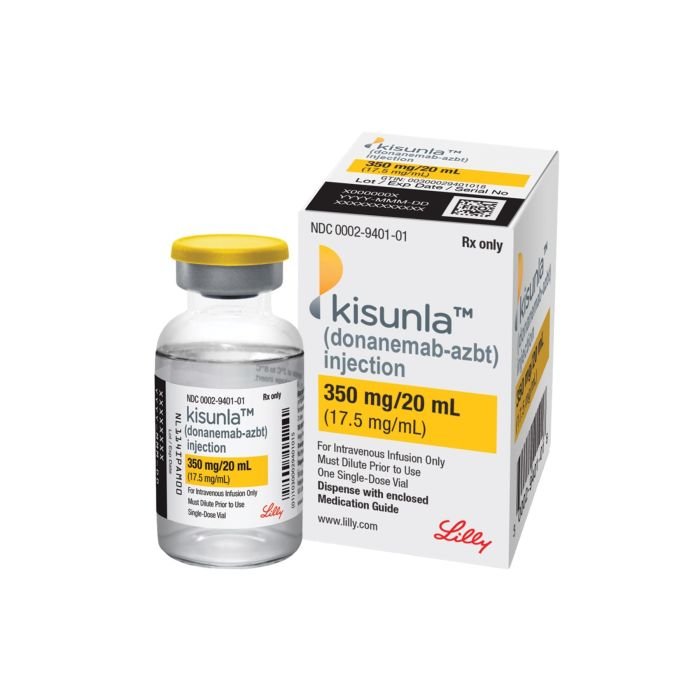
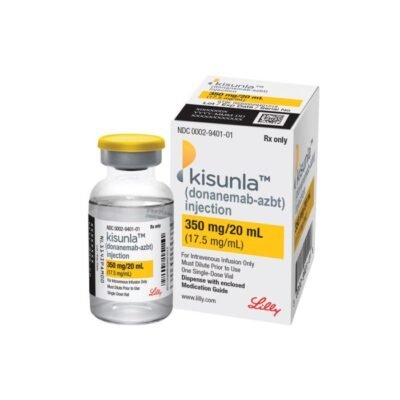
Kisunla (Donanemab-azbt): Uses, Dosage, Side Effects, Safety, and Frequently Asked Questions
What Is Kisunla (Donanemab-azbt)?
Kisunla (donanemab-azbt) is a prescription medication used to treat early symptomatic Alzheimer’s disease. It belongs to a group of medicines called amyloid beta-directed antibodies or monoclonal antibodies.
Kisunla works by targeting and helping remove amyloid beta plaques that build up in the brain. These plaques are believed to play a role in the development and progression of Alzheimer’s disease.
Kisunla is used for:
- Early Alzheimer’s disease.
- Mild cognitive impairment (MCI) due to Alzheimer’s disease.
- Mild dementia due to Alzheimer’s disease.
Treatment is intended for patients with confirmed amyloid pathology in the brain and is administered under specialist medical supervision.
How Kisunla Works
Kisunla is a laboratory-made antibody designed to recognize and attach to specific forms of amyloid beta plaques in the brain.
By binding to amyloid plaques, Kisunla may help:
- Mark plaques for removal by the immune system.
- Reduce amyloid plaque buildup.
- Slow certain aspects of cognitive decline in some people with early Alzheimer’s disease.
Kisunla does not restore lost memories or cure Alzheimer’s disease, but it may help slow disease progression in appropriate patients.
Kisunla Uses
Early Alzheimer’s Disease
Kisunla is used for people with early stages of Alzheimer’s disease, including:
- Mild cognitive impairment due to Alzheimer’s disease.
- Mild Alzheimer’s dementia.
Alzheimer’s disease is a progressive brain disorder that can affect:
- Memory.
- Thinking abilities.
- Problem-solving skills.
- Daily activities.
- Behavior and communication.
Kisunla treatment is considered after confirming the presence of amyloid plaques through appropriate medical evaluation.
Understanding Alzheimer’s Disease
Alzheimer’s disease is a neurological condition associated with gradual changes in the brain.
Common symptoms may include:
- Increasing memory problems.
- Difficulty finding words.
- Confusion about time or place.
- Trouble completing familiar tasks.
- Changes in mood or behavior.
Early diagnosis allows healthcare providers to evaluate treatment options and create an appropriate care plan.
Benefits of Kisunla
When used as prescribed, Kisunla may help:
- Reduce amyloid plaque levels in the brain.
- Slow decline in cognitive function for some individuals.
- Support longer maintenance of daily abilities.
- Provide a disease-modifying treatment option for early Alzheimer’s disease.
The benefits and response to treatment vary between individuals.
Kisunla Dosage
The recommended Kisunla dose depends on:
- Treatment stage.
- Patient weight.
- Medical history.
- Amyloid plaque levels.
- Healthcare provider assessment.
General guidance:
- Kisunla is given by intravenous (IV) infusion.
- Treatment is administered according to a healthcare provider’s schedule.
- Brain imaging and clinical monitoring are required during treatment.
- Do not change treatment schedules without medical advice.
How Kisunla Is Given
Kisunla is administered through:
- Intravenous infusion in a healthcare setting.
- Regular treatment appointments.
- Monitoring before and after infusion when needed.
Before starting Kisunla, healthcare providers may perform:
- Brain imaging to confirm amyloid plaques.
- MRI scans to evaluate safety risks.
- Cognitive assessments.
- Medical history review.
Missed Dose
If you miss a scheduled Kisunla infusion:
- Contact your healthcare provider.
- Arrange a new appointment as recommended.
- Do not attempt to change your treatment schedule without medical guidance.
Keeping scheduled infusions and monitoring appointments is important for safe treatment.
Common Side Effects
Common side effects of Kisunla may include:
- Infusion-related reactions.
- Headache.
- Nausea.
- Fatigue.
- Dizziness.
- Changes seen on brain MRI scans related to treatment.
Tell your healthcare provider about any symptoms that occur after receiving Kisunla.
Serious Side Effects
Seek immediate medical attention if you experience:
- Severe headache.
- Confusion.
- Vision changes.
- Seizures.
- Difficulty walking.
- Sudden weakness or numbness.
- Symptoms of brain swelling or bleeding.
Kisunla may cause a condition called amyloid-related imaging abnormalities (ARIA), which can involve brain swelling (ARIA-E) or small brain bleeding (ARIA-H).
Safety Information
Before receiving Kisunla, tell your healthcare provider if you have:
- A history of brain bleeding.
- Blood clotting problems.
- Use of blood-thinning medicines.
- Brain abnormalities.
- Seizures.
- Other neurological conditions.
- Pregnancy or plans to become pregnant.
- Breastfeeding.
Your healthcare provider may recommend monitoring such as:
- MRI brain scans.
- Cognitive assessments.
- Evaluation for ARIA symptoms.
- Genetic testing in some patients.
Amyloid-Related Imaging Abnormalities (ARIA)
ARIA is an important safety consideration with Kisunla treatment.
ARIA may occur without symptoms but can sometimes cause:
- Headache.
- Confusion.
- Dizziness.
- Nausea.
- Vision changes.
- Seizures.
MRI monitoring helps healthcare providers identify ARIA and decide whether treatment should continue, pause, or be adjusted.
Drug Interactions
Specific drug interaction information for Kisunla is limited because it is a monoclonal antibody therapy.
Tell your healthcare provider about:
- Prescription medicines.
- Blood thinners.
- Over-the-counter medicines.
- Vitamins.
- Supplements.
- Herbal products.
Your healthcare team can evaluate possible safety concerns before treatment.
Alcohol and Kisunla
There is no specific known direct interaction between alcohol and Kisunla.
However, alcohol may affect:
- Memory.
- Balance.
- Brain health.
- Overall safety in people with cognitive impairment.
Discuss alcohol use with your healthcare provider.
Pregnancy and Breastfeeding
If you are pregnant, planning pregnancy, or breastfeeding:
- Inform your healthcare provider before receiving Kisunla.
- Discuss possible benefits and risks.
- Follow medical advice regarding treatment decisions.
Your healthcare provider can determine whether Kisunla is appropriate for your situation.
Storage
Kisunla is prepared and stored by healthcare professionals.
Important storage considerations:
- Store according to manufacturer requirements.
- Keep controlled by trained medical staff.
- Do not use improperly stored medication.
Frequently Asked Questions (FAQs)
What is Kisunla used for?
Kisunla is used to treat early symptomatic Alzheimer’s disease in people with confirmed amyloid beta plaques in the brain.
Is Kisunla a cure for Alzheimer’s disease?
No. Kisunla does not cure Alzheimer’s disease, but it may help slow disease progression in some eligible patients.
How does Kisunla work?
Kisunla targets amyloid beta plaques in the brain and helps the immune system remove them.
How is Kisunla given?
Kisunla is given through an intravenous infusion by healthcare professionals.
How long does Kisunla treatment last?
Treatment duration depends on individual response, amyloid plaque levels, and healthcare provider recommendations.
Does Kisunla improve memory?
Kisunla may help slow cognitive decline in some people with early Alzheimer’s disease, but it does not reverse existing memory loss.
What is ARIA with Kisunla?
ARIA is a possible treatment-related brain imaging finding involving swelling or small bleeding in the brain that requires monitoring.
Who should not take Kisunla?
People with certain medical conditions, such as specific bleeding risks or other safety concerns, may not be suitable candidates. A healthcare provider will evaluate eligibility.
Can older adults receive Kisunla?
Yes. Kisunla is intended for appropriate patients with early Alzheimer’s disease, many of whom are older adults, but individual assessment is required.
What happens if I miss a Kisunla infusion?
Contact your healthcare provider to reschedule and follow their instructions.
Final Thoughts
Kisunla (donanemab-azbt) is a monoclonal antibody therapy designed to treat early symptomatic Alzheimer’s disease by targeting amyloid beta plaques in the brain.
It represents a disease-modifying treatment approach that may slow cognitive decline in certain eligible patients. Because Kisunla can have serious risks, including amyloid-related imaging abnormalities (ARIA), treatment requires careful patient selection, MRI monitoring, and ongoing medical supervision.
Medical Disclaimer: This article is for educational and informational purposes only and should not replace professional medical advice, diagnosis, or treatment. Always consult a qualified healthcare professional before starting, stopping, or changing any medication.
Be the first to review “Kisunla (donanemab-azbt)”
Related products
Reviews
There are no reviews yet.