
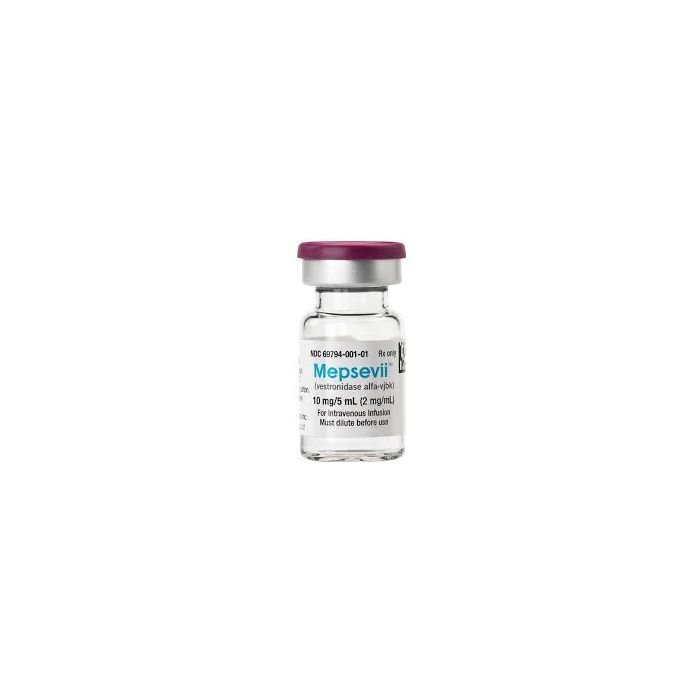

Mepsevii (Vestronidase Alfa): Uses, Dosage, Side Effects, Safety, and Frequently Asked Questions
What Is Mepsevii (Vestronidase Alfa)?
Mepsevii (vestronidase alfa) is a prescription enzyme replacement therapy used to treat mucopolysaccharidosis type VII (MPS VII), also known as Sly syndrome.
MPS VII is a rare inherited metabolic disorder caused by a deficiency of an enzyme called beta-glucuronidase (GUSB). Without enough of this enzyme, certain complex sugar molecules called glycosaminoglycans (GAGs) build up inside cells and can damage different organs and tissues.
Mepsevii works by providing a laboratory-produced version of the missing enzyme to help the body break down accumulated GAGs.
Mepsevii is used for:
- Mucopolysaccharidosis type VII (MPS VII).
- Sly syndrome.
- Enzyme deficiency related to beta-glucuronidase.
How Mepsevii Works
Mepsevii is a form of enzyme replacement therapy (ERT).
In people with MPS VII, the body does not produce enough functional beta-glucuronidase enzyme. This causes GAGs to accumulate in cells and tissues.
Mepsevii provides a recombinant form of beta-glucuronidase that may help:
- Break down stored glycosaminoglycans.
- Reduce cellular buildup.
- Improve certain symptoms associated with MPS VII.
- Support normal body functions affected by enzyme deficiency.
Mepsevii Uses
Mucopolysaccharidosis Type VII (MPS VII)
Mepsevii is approved for patients with MPS VII, a rare genetic disorder affecting multiple body systems.
MPS VII may cause symptoms involving:
- Bones and joints.
- Heart and blood vessels.
- Breathing system.
- Vision and hearing.
- Physical growth.
- Mobility.
- Developmental function.
Mepsevii treatment aims to replace the missing enzyme and help manage disease-related effects.
Understanding Mucopolysaccharidosis Type VII (Sly Syndrome)
MPS VII is an inherited lysosomal storage disorder caused by changes in the GUSB gene.
The condition can lead to accumulation of GAGs in lysosomes, which are structures inside cells responsible for breaking down substances.
Symptoms may vary but can include:
- Skeletal abnormalities.
- Enlarged organs.
- Joint stiffness.
- Respiratory problems.
- Heart complications.
- Developmental challenges.
- Reduced physical endurance.
Because MPS VII is rare, treatment is usually managed by specialists familiar with inherited metabolic disorders.
Benefits of Mepsevii
When used as prescribed, Mepsevii may help:
- Replace the missing beta-glucuronidase enzyme.
- Reduce glycosaminoglycan accumulation.
- Improve certain physical symptoms of MPS VII.
- Support improved mobility and endurance in some patients.
- Help manage disease progression.
The effects of treatment can vary depending on disease severity, age, and individual response.
Mepsevii Dosage
The recommended Mepsevii dose depends on:
- Body weight.
- Medical condition.
- Treatment response.
- Overall health.
General guidance:
- Mepsevii is administered by intravenous (IV) infusion.
- Treatment is usually given regularly according to a healthcare provider’s schedule.
- Dosage adjustments may be considered based on clinical response.
- Treatment should only be managed by trained healthcare professionals.
How Mepsevii Is Given
Mepsevii is not taken as a tablet or capsule.
Administration usually involves:
- Intravenous infusion through a vein.
- Administration in a healthcare setting.
- Monitoring during and after infusion.
Before receiving Mepsevii:
- Tell your healthcare provider about allergies.
- Inform them about previous infusion reactions.
- Report any new symptoms during treatment.
Missed Dose
If you miss a scheduled Mepsevii infusion:
- Contact your healthcare provider.
- Follow the recommended plan for rescheduling.
- Do not attempt to adjust treatment timing without medical guidance.
Regular treatment schedules are important for maintaining enzyme replacement therapy.
Common Side Effects
Common side effects of Mepsevii may include:
- Infusion-related reactions.
- Rash.
- Hives.
- Itching.
- Fever.
- Vomiting.
- Diarrhea.
- Swelling.
- Irritability.
- Changes in vital signs during infusion.
Tell your healthcare provider about any side effects that occur during or after treatment.
Serious Side Effects
Seek immediate medical attention if you experience:
- Severe allergic reactions.
- Difficulty breathing.
- Swelling of the face, lips, or throat.
- Severe rash.
- Chest discomfort.
- Fainting.
- Severe infusion reactions.
Healthcare professionals may monitor patients closely during infusions because allergic reactions can occur.
Safety Information
Before receiving Mepsevii, tell your healthcare provider if you have:
- A history of allergic reactions.
- Previous infusion-related reactions.
- Breathing problems.
- Heart problems.
- Pregnancy or plans to become pregnant.
- Breastfeeding.
Your healthcare team may monitor:
- Vital signs during infusion.
- Signs of allergic reactions.
- Treatment response.
- Overall disease symptoms.
Drug Interactions
Specific drug interaction information for Mepsevii is limited because it is an enzyme replacement therapy administered by infusion.
Always tell your healthcare provider about:
- Prescription medications.
- Over-the-counter medicines.
- Vitamins.
- Supplements.
- Herbal products.
Your healthcare team can evaluate whether other treatments may affect your care plan.
Alcohol and Mepsevii
There is no specific known alcohol interaction with Mepsevii.
However, alcohol use should be discussed with your healthcare provider, especially if you have:
- Heart complications.
- Liver concerns.
- Other medical conditions.
- Additional medications.
Pregnancy and Breastfeeding
If you are pregnant, planning pregnancy, or breastfeeding:
- Tell your healthcare provider before starting Mepsevii.
- Discuss potential benefits and risks of treatment.
- Follow medical advice regarding continued therapy.
Because MPS VII is a genetic condition, treatment decisions may involve specialists in metabolic disorders and genetics.
Storage
Mepsevii is stored and prepared by healthcare professionals.
Important storage considerations:
- Keep according to manufacturer and healthcare facility requirements.
- Protect from improper storage conditions.
- Do not use medication that has been incorrectly stored.
Frequently Asked Questions (FAQs)
What is Mepsevii used for?
Mepsevii is used to treat mucopolysaccharidosis type VII (MPS VII), also called Sly syndrome, by replacing the missing beta-glucuronidase enzyme.
Is Mepsevii chemotherapy?
No. Mepsevii is not chemotherapy. It is an enzyme replacement therapy designed to replace a missing enzyme.
How does Mepsevii work?
Mepsevii provides a recombinant form of beta-glucuronidase that helps break down glycosaminoglycans that accumulate in people with MPS VII.
How is Mepsevii given?
Mepsevii is given through an intravenous infusion by healthcare professionals.
How often is Mepsevii administered?
The treatment schedule depends on the prescribed medical plan and patient needs.
Can Mepsevii cure MPS VII?
Mepsevii does not cure MPS VII, but it may help manage symptoms and reduce effects caused by enzyme deficiency.
Can children receive Mepsevii?
Yes. Mepsevii may be used in pediatric patients with MPS VII under specialist medical supervision.
Can Mepsevii cause allergic reactions?
Yes. Infusion-related allergic reactions may occur, so patients are monitored during treatment.
How long does Mepsevii treatment continue?
Treatment duration depends on individual needs and ongoing evaluation by healthcare providers.
What happens if an infusion is missed?
Contact your healthcare provider to arrange the next infusion schedule. Do not adjust treatment without medical advice.
Final Thoughts
Mepsevii (vestronidase alfa) is an enzyme replacement therapy designed to treat mucopolysaccharidosis type VII (MPS VII), a rare inherited metabolic disorder caused by beta-glucuronidase deficiency.
By replacing the missing enzyme, Mepsevii may help reduce glycosaminoglycan accumulation and support management of disease-related symptoms.
Because MPS VII is a complex genetic condition, treatment should be supervised by healthcare professionals experienced in rare metabolic disorders. Regular follow-up and monitoring are important for safe and effective care.
Medical Disclaimer: This article is for educational and informational purposes only and should not replace professional medical advice, diagnosis, or treatment. Always consult a qualified healthcare professional before starting, stopping, or changing any medication.
Be the first to review “Mepsevii (vestronidase alfa)”
Related products
Reviews
There are no reviews yet.