
Mod GRF 1-29 2 mg: Uses, Dosage, Side Effects, Safety, and Frequently Asked Questions
What Is Mod GRF 1-29 2 mg?
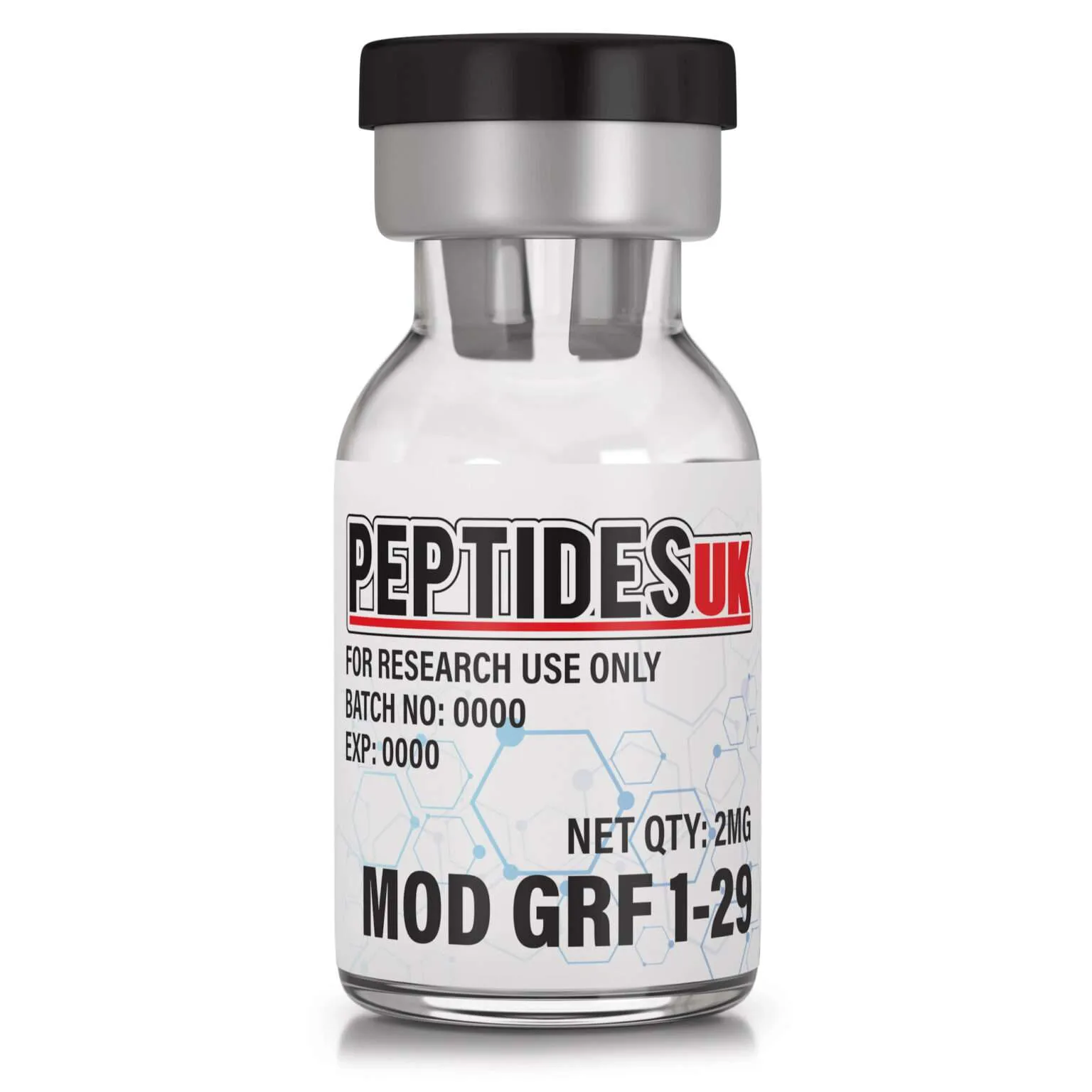
Mod GRF 1-29 (Modified Growth Hormone-Releasing Factor 1-29) is an investigational peptide that is a modified version of the naturally occurring growth hormone-releasing hormone (GHRH). It has been studied for its ability to stimulate the body’s natural production and release of growth hormone (GH) from the pituitary gland.
Mod GRF 1-29 is also commonly known as CJC-1295 without DAC. It is designed to mimic part of the natural GHRH sequence involved in regulating growth hormone secretion.
Researchers have investigated Mod GRF 1-29 for its potential effects on:
- Growth hormone regulation.
- IGF-1 production.
- Endocrine signaling.
- Metabolic pathways.
- Growth hormone physiology.
A 2 mg vial refers to the amount of peptide contained in certain research products and does not represent an approved therapeutic dose.
Important: Mod GRF 1-29 is not approved by the U.S. Food and Drug Administration (FDA) for the treatment of any medical condition. Available information comes mainly from scientific research and investigational studies.
How Mod GRF 1-29 Works
Mod GRF 1-29 works by mimicking the action of growth hormone-releasing hormone (GHRH), which is naturally produced in the hypothalamus.
When GHRH receptors are activated, this signaling pathway may:
- Stimulate the pituitary gland to release growth hormone.
- Support natural growth hormone pulse patterns.
- Increase insulin-like growth factor-1 (IGF-1) levels indirectly.
- Influence growth hormone-related metabolic processes.
Unlike synthetic human growth hormone, Mod GRF 1-29 does not directly provide GH. Instead, it encourages the body’s own growth hormone release.
Potential Uses of Mod GRF 1-29
Because Mod GRF 1-29 remains investigational, the following are research areas rather than approved medical uses.
Growth Hormone Research
Researchers study Mod GRF 1-29 to better understand:
- Growth hormone secretion.
- Pituitary gland function.
- Hormonal communication between the brain and endocrine system.
Endocrine Research
Scientists investigate Mod GRF 1-29 for its relationship with:
- Growth hormone pathways.
- IGF-1 regulation.
- Hormonal balance.
- Neuroendocrine signaling.
Body Composition Research
Studies have explored growth hormone pathways related to:
- Lean body mass.
- Fat metabolism.
- Muscle preservation.
- Changes in body composition.
These areas remain experimental.
Metabolic Research
Researchers continue studying possible connections between growth hormone signaling and:
- Energy metabolism.
- Protein metabolism.
- Cellular processes.
- Hormonal regulation.
Potential Benefits of Mod GRF 1-29
Based on current research, Mod GRF 1-29 may have potential roles in:
- Stimulating natural growth hormone release.
- Supporting research into GH regulation.
- Increasing understanding of IGF-1 pathways.
- Studying endocrine function.
- Exploring growth hormone-related metabolism.
These potential effects have not been established as approved medical benefits, and further human clinical research is required.
Dosage
There is no FDA-approved dosage for Mod GRF 1-29.
Currently:
- No standardized therapeutic dosing guidelines exist.
- Human dosing for routine medical use has not been established.
- The “2 mg” strength refers only to the amount of peptide contained in a research product.
Mod GRF 1-29 should only be studied within appropriately approved research environments or where legally permitted under qualified supervision.
How Mod GRF 1-29 Is Administered
Because Mod GRF 1-29 is not an approved medication, there is no FDA-approved administration protocol for routine clinical treatment.
Research protocols may vary depending on:
- Study objectives.
- Research design.
- Regulatory requirements.
Missed Dose
There are no established missed-dose recommendations because Mod GRF 1-29 is not an approved medication.
Individuals participating in authorized research should follow instructions provided by study investigators.
Possible Side Effects
The complete safety profile of Mod GRF 1-29 has not been fully established.
Potential side effects may include:
- Injection site reactions.
- Headache.
- Fatigue.
- Flushing.
- Dizziness.
- Nausea.
- Water retention.
- Changes related to growth hormone activity.
Additional effects may become known as research continues.
Serious Side Effects
Seek immediate medical attention if serious symptoms occur, including:
- Severe allergic reactions.
- Difficulty breathing.
- Swelling of the face, lips, tongue, or throat.
- Chest pain.
- Severe dizziness.
- Loss of consciousness.
Because long-term safety data are limited, unexpected effects may occur.
Safety Information
Before considering Mod GRF 1-29 research use, discuss your health history with a healthcare professional.
Inform your healthcare provider if you have:
- Diabetes.
- Heart disease.
- Liver disease.
- Kidney disease.
- Pituitary disorders.
- Hormonal disorders.
- Active cancer.
- Pregnancy or plans to become pregnant.
- Breastfeeding.
Growth hormone-related pathways can affect multiple systems in the body, making medical supervision important.
Drug Interactions
Potential interactions with Mod GRF 1-29 have not been fully established.
Tell your healthcare provider about all:
- Prescription medications.
- Growth hormone treatments.
- Hormone therapies.
- Diabetes medications.
- Supplements.
- Other peptide compounds.
Pregnancy and Breastfeeding
There is insufficient information regarding the safety of Mod GRF 1-29 during pregnancy or breastfeeding.
Until more research is available, Mod GRF 1-29 should not be used during pregnancy or breastfeeding except within appropriately approved research settings.
Storage
Storage requirements depend on the specific formulation.
General recommendations include:
- Follow manufacturer storage instructions.
- Refrigerate if required.
- Protect from heat and direct sunlight.
- Keep in the original container.
- Keep away from children.
Always follow product-specific storage instructions.
Frequently Asked Questions (FAQs)
What is Mod GRF 1-29 2 mg?
Mod GRF 1-29 is an investigational peptide that mimics growth hormone-releasing hormone and has been studied for its ability to stimulate natural growth hormone release.
Is Mod GRF 1-29 FDA approved?
No. Mod GRF 1-29 is not FDA approved for the treatment of any medical condition.
Is Mod GRF 1-29 the same as CJC-1295?
Mod GRF 1-29 is often referred to as CJC-1295 without DAC, but it is different from CJC-1295 with DAC, which has additional modifications that affect its activity and duration.
How does Mod GRF 1-29 work?
It activates GHRH receptors, signaling the pituitary gland to release growth hormone.
Is Mod GRF 1-29 the same as HGH?
No. Mod GRF 1-29 stimulates the body’s own growth hormone production rather than directly providing human growth hormone.
Can Mod GRF 1-29 increase muscle growth?
Growth hormone pathways are involved in muscle and metabolism research, but Mod GRF 1-29 is not an approved muscle-building treatment.
What are possible side effects?
Potential effects may include injection site reactions, headache, fatigue, flushing, nausea, dizziness, and water retention.
Can athletes use Mod GRF 1-29?
Athletes should be aware that growth hormone secretagogues may be restricted or prohibited under anti-doping regulations.
Is Mod GRF 1-29 legal?
Its legal status varies by country. It is not an FDA-approved medication and may only be available for authorized research or other legally permitted purposes.
Final Thoughts
Mod GRF 1-29 is an investigational peptide studied for its ability to influence growth hormone secretion, GHRH signaling, and IGF-1-related pathways. Researchers continue exploring its role in endocrine science, metabolism, and growth hormone regulation.
Although Mod GRF 1-29 has attracted interest in peptide research, it has not been approved by the FDA or major regulatory authorities for routine medical use. More clinical research is needed to determine its long-term safety, effectiveness, and potential therapeutic applications.
Medical Disclaimer: This article is for educational and informational purposes only and should not replace professional medical advice, diagnosis, or treatment. Mod GRF 1-29 is an investigational peptide and has not been approved by the U.S. FDA for routine clinical use. Always consult a qualified healthcare professional before considering any investigational therapy.
Be the first to review “Mod GRF 1-29 2mg”
Related products
Uncategorized
Reviews
There are no reviews yet.